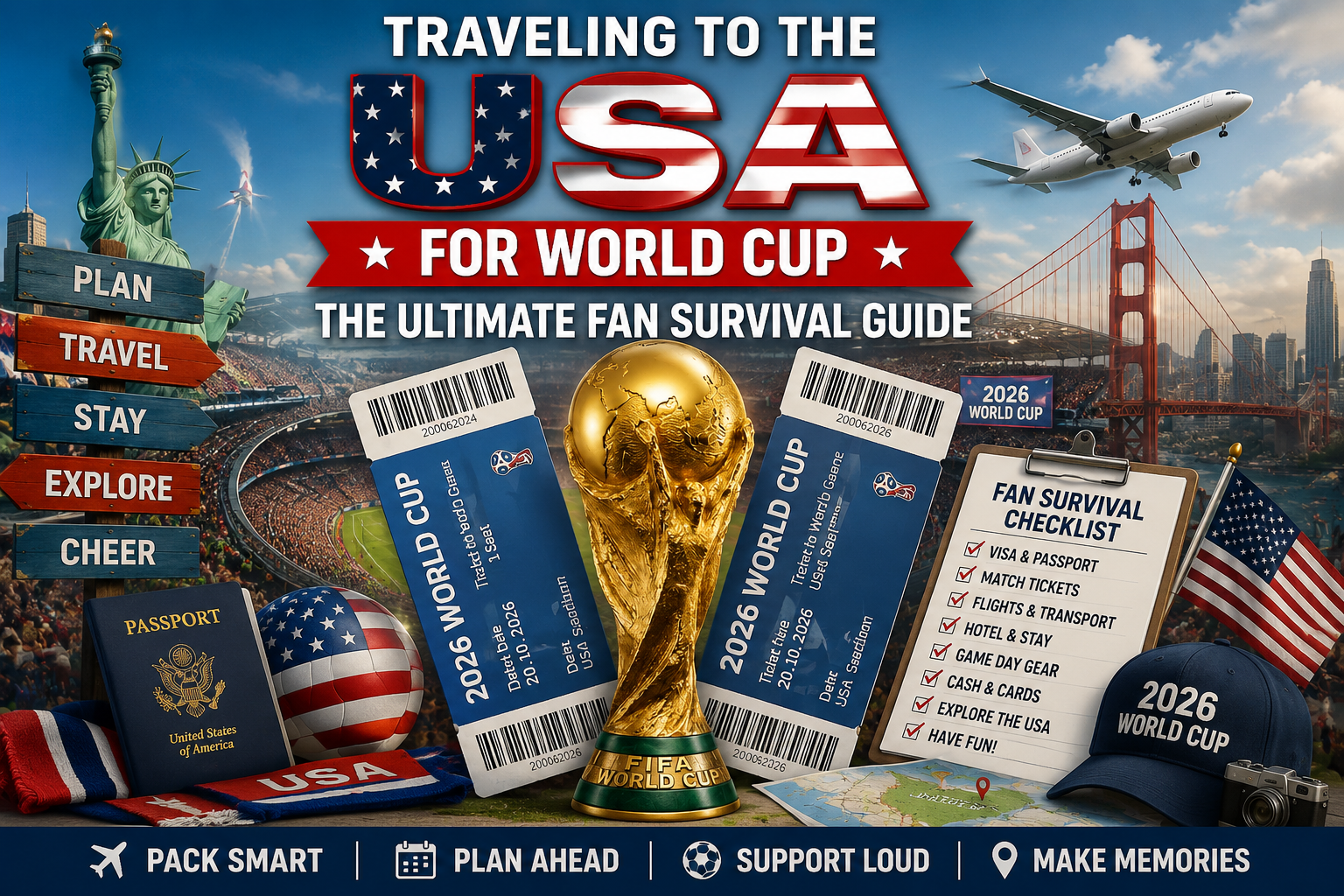
Traveling to the USA for World Cup: The Ultimate Fan Survival Guide The countdown has ended, and the biggest sporting event on earth has finally arrived. Traveling to the USA for World Cup matches is a dream come true for millions of soccer fans. With world-class stadiums stretching from the East Coast to the Pacific […]
Disclaimer: This post contains affiliate links. We may earn a small commission if you make a purchase through them, at no extra cost to you. Read our full Affiliate Disclosure here.
Traveling to the USA for World Cup: The Ultimate Fan Survival Guide
The countdown has ended, and the biggest sporting event on earth has finally arrived. Traveling to the USA for World Cup matches is a dream come true for millions of soccer fans. With world-class stadiums stretching from the East Coast to the Pacific Northwest, the atmosphere across America is electric.
However, this is not just any tournament. The sheer geographic scale of the United States, combined with strict stadium security rules and complex transit networks, makes this a challenging trip to navigate. If you are bouncing between cities like New York, Miami, Los Angeles, and Dallas to follow your team, you cannot just wing it.
To help you survive and thrive during match month, this battle-tested fan guide covers everything you need to know about logistics, stadium culture, and the essential gear required to make your tournament experience seamless.
1. The Geographic Shock: Navigating the Host Cities
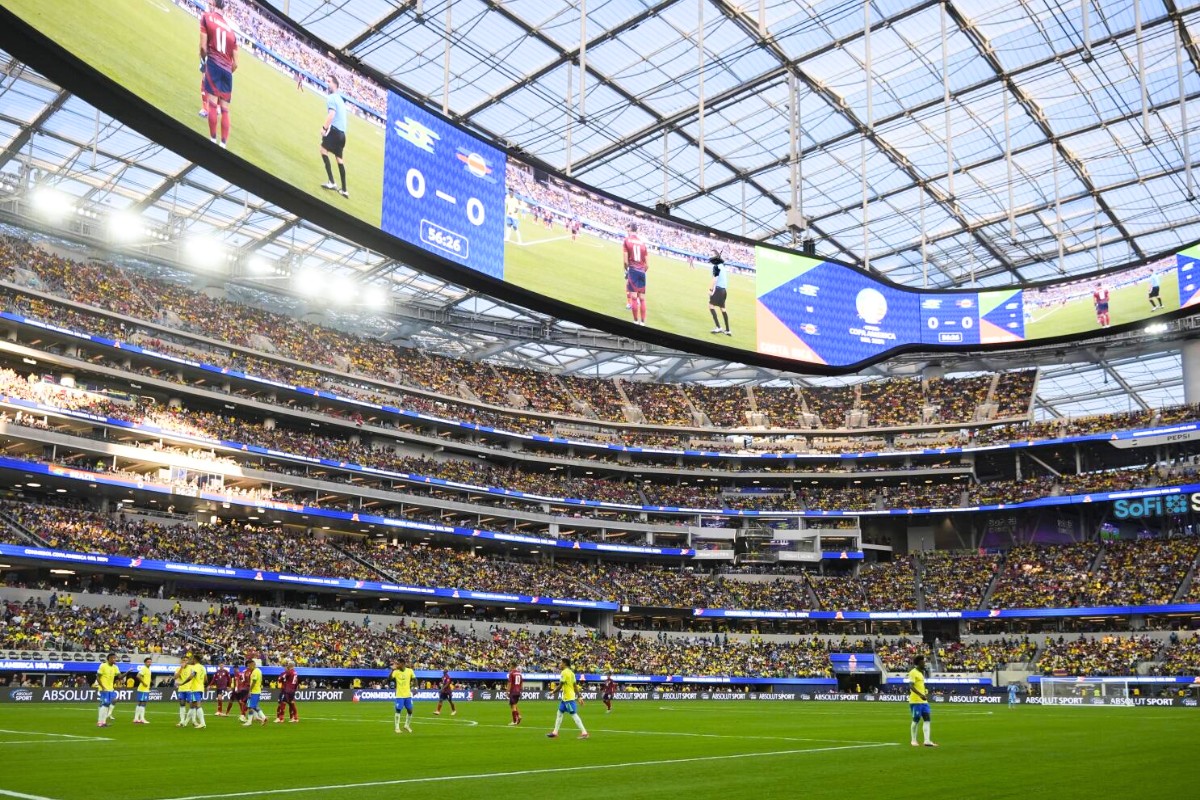
The biggest mistake international fans make when traveling to the USA for World Cup groups is underestimating the distances. Flying from a match in Miami to another match in Seattle takes over six hours of flight time—that is longer than flying from London to Cairo!
Coast-to-Coast Transit Strategy
- Ditch the Trains: Do not expect a European-style high-speed rail system. Outside of the Northeast Corridor (Boston to Washington D.C.), cross-country trains are too slow for tight tournament schedules.
- Domestic Aviation Hubs: Flying is your primary tool. Airlines like Delta, United, American, and budget options like Southwest operate heavy schedules between host cities. Book your multi-city flights months in advance, as prices skyrocket on match weeks.
- The Match-Day Rideshare Crunch: US stadiums are often located outside downtown cores (e.g., AT&T Stadium in Arlington near Dallas, or MetLife Stadium in New Jersey near NYC). On match days, Uber and Lyft prices will suffer from extreme “surge pricing.” Always look into official stadium shuttle buses or local park-and-ride options to save hundreds of dollars.
2. Tech on Match Day: Network Congestion & Connectivity
Picture this: your team scores a 90th-minute winner, you record the chaotic celebration, and you try to upload it to Instagram or text your friends—only to see the dreaded “No Internet Connection” spin endlessly.
With 80,000+ fans inside a stadium shouting, streaming, and calling rideshares, local cell towers get completely overwhelmed.
Why a Premium Travel eSIM is Mandatory
To cut through the digital noise, you need a reliable network. Relying on public stadium Wi-Fi is a recipe for frustration and a massive data security risk. If your phone is unlocked, getting a dedicated digital data profile before you land is the smartest move.
The two network giants in America, T-Mobile and AT&T, deploy localized 5G Ultra-Capacity nodes around major World Cup venues. T-Mobile excels in high-speed data delivery in dense crowds, while AT&T offers bulletproof stability.
To compare data packages, installation steps, and see which networks cover specific stadiums best, head over to our detailed breakdown inside our Tech Reviews & Picks section. Don’t let a dead connection leave you stranded outside the stadium after dark.
3. Power Management: Don’t Let Your Phone Die Before Kickoff
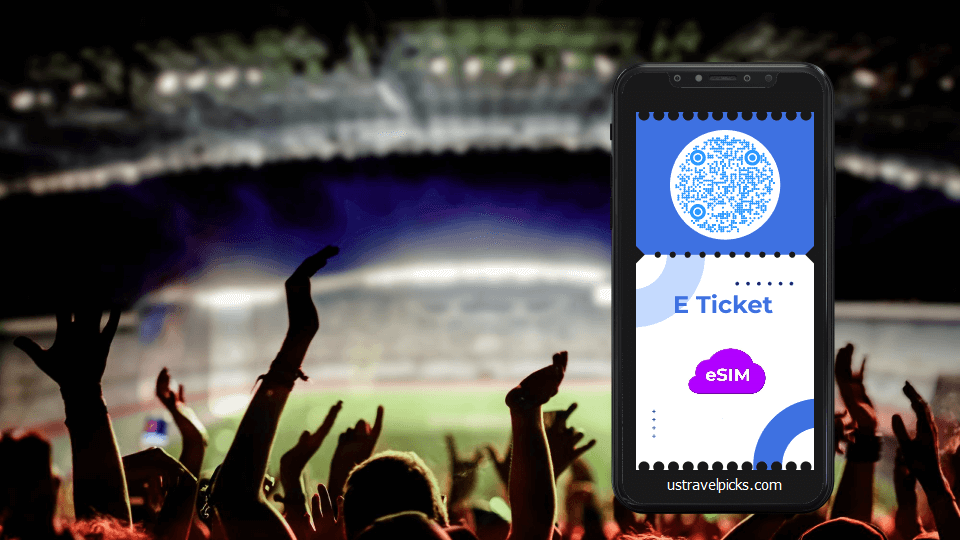
Between scanning digital tickets at the turnstiles, navigating congested transit lines, recording video highlights, and coordinates with friends, your smartphone’s battery life will plummet. A dead phone means no ticket access, no communication, and no way to call a ride back to your hotel.
TSA and Stadium Power Bank Rules
You absolutely need a portable power bank, but you must choose one that complies with two separate sets of strict American laws:
- The TSA Rule: If you are flying between host cities, your power bank must be in your carry-on luggage and cannot exceed 100 Watt-hours (Wh) (roughly 26,800mAh). Anything larger will be seized at airport security.
- The Stadium Security Gate Rule: Stadium security personnel are incredibly strict during FIFA events. Large, industrial-looking battery blocks or power banks with loose wires can be flagged as security risks.
You need a sleek, high-efficiency, pocket-sized portable charger that packs enough juice to charge your device twice but remains small enough to pass security scanners without raising eyebrows. For a curated list of field-tested, crowd-proven power accessories, explore our hardware roundups in Gear Reviews & Guides.
4. The Clear Bag Policy: Passing Stadium Security Fast
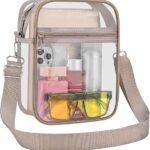
American sports venues enforce an uncompromising security standard known as the Clear Bag Policy. If you show up to a World Cup match with a standard backpack, a leather purse, or an opaque drawstring bag, security will refuse you entry, forcing you to hike back to your car or pay for an expensive locker outside the gates.
The Rules of the Bag Game
- What is allowed: Bags that are clear plastic, vinyl, or PVC and do not exceed 12″ x 6″ x 12″ in size. You are also allowed a small clutch purse (roughly the size of your hand) that does not have to be clear.
- Prohibited Items: Long camera lenses (professional gear without media credentials), drones, selfie sticks, large umbrellas, and outside food or thermoses.
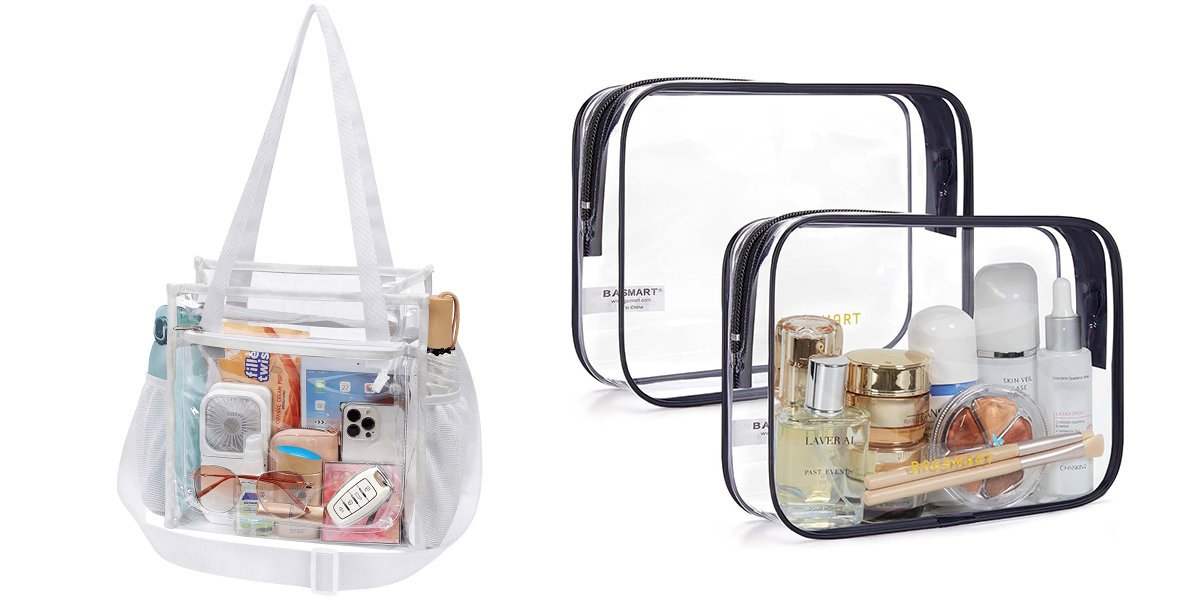
To ensure you don’t lose precious match time fighting with security guards, we recommend buying a heavy-duty, reinforced clear stadium bag before the tournament begins. We have reviewed the most durable, comfortable, and water-resistant stadium-compliant options available over in our Gear Reviews & Guides catalog.
5. Fan Culture in the USA: Tailgating and Tipping
Attending a sports match in the USA is a full-day cultural experience, completely different from European or South American soccer matches.
The Art of the Tailgate
In cities like Dallas, Kansas City, and Houston, the real party starts 4 to 5 hours before kickoff in the stadium parking lots. This is called Tailgating. Americans bring pickup trucks, massive grills, flat-screen TVs, and lawn games.
The culture is incredibly welcoming. If you wear your team’s jersey, smile, and strike up a conversation, local fans will often invite you to join their circle, offer you a local beer, and hand you an authentic American burger.
Match-Day Financial Realities
- Cashless Venues: Almost 100% of major US stadiums are completely cashless. You cannot buy a hot dog or a souvenir jersey with paper dollar bills. Ensure you have physical Visa or Mastercard credit cards, or active Apple Pay/Google Wallet configurations.
- Concession Tipping: When buying food or drinks at stadium kiosks, the digital checkout screen will often ask for a tip (15%, 18%, or 20%). For over-the-counter sales where you stand in line to grab your own food, tipping is appreciated but optional. However, if you order drinks from a bartender or sit at a stadium restaurant, a 18%-20% tip is standard.
Summary Checklist: Your World Cup Match-Day Strategy
| Phase | Action Item | Why It Matters |
| Pre-Match (3 Hours Out) | Activate Your US eSIM | Ensures seamless maps and rideshare communications before network congestion hits. Check out Tech Reviews & Picks. |
| Packing Check | Pack the Clear Bag | Standard backpacks are banned. Use a verified clear stadium bag. |
| Power Check | Charge the Carry-on Power Bank | Keeps your phone alive for digital ticketing and post-match Ubers. |
| Arrival (2 Hours Out) | Clear Stadium Security | Lines are massive during global events; give yourself a buffer. |
| Post-Match | Wait Out the Surge | Grab food nearby or check out fan zones instead of paying a 400% premium on Ubers immediately. |
Final Thoughts: Prepare for the Ultimate Experience
Traveling to the USA for World Cup excitement is a high-speed, thrilling adventure. The stadiums are architectural wonders, the crowds are diverse, and the entertainment value is unmatched. But a successful fan journey requires planning ahead for strict stadium regulations, digital dependencies, and transportation realities.
Don’t let a dead battery or a security mistake ruin your match-day memories. Equip your inventory with vetted, tournament-ready equipment by checking out our deep-dive teardowns inside Gear Reviews & Guides today. Enjoy the beautiful game on American soil!
Travel Essentials for Your Trip
Make your journey smoother with our top-rated travel gear and travel technology recommendations.
More Travel Guides
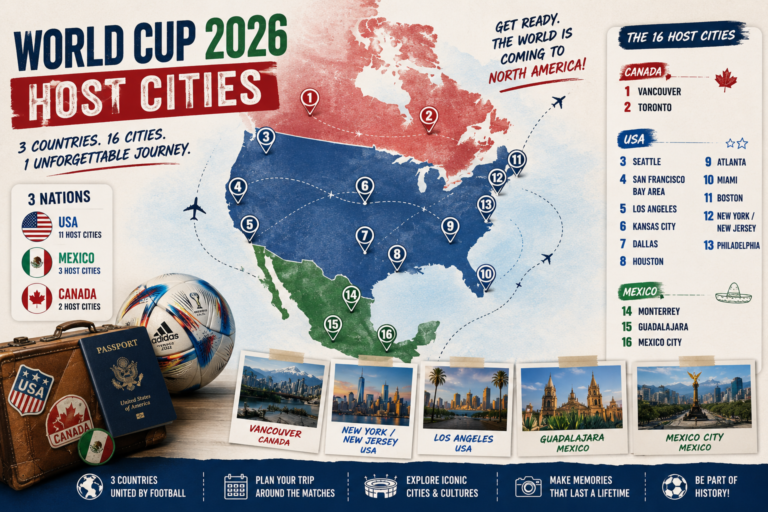
Table of Contents
Latest Articles
 How to Protect Your Tech While Traveling: 5 Smart Anti-Theft Tips
 World Cup 2026 Transit Guide: 5 Border Crossing Tech Rules
 Traveling between US and Canada for World Cup: 5 eSIM & Tech Tips
 World Cup Cross Border Travel: 5 Crucial Logistics Tips
 World Cup 2026 Travel Guide: Top US Destinations to Explore Between Matches
Popular Reviews

Alpha Keeper Money Belt Review: 1 Best Hidden Travel Wallet?

Derila Ergo Cervical Neck Pillow Review: 1 Best Sleeping Solution?

Owala FreeSip Water Bottle Review: 1 Best Travel Companion in 2026?
USPECLARE Clear Purse Review: 1 Best Stadium Approved Crossbody Bag?