Table of Contents
Disclaimer: This post contains affiliate links. We may earn a small commission if you make a purchase through them, at no extra cost to you. Read our full Affiliate Disclosure here.
How to Protect Your Tech While Traveling: 5 Smart Anti-Theft Tips That Actually Work
After more than a decade of traveling with laptops, cameras, tablets, and mobile workstations across airports, train stations, and crowded tourist destinations, I’ve learned one uncomfortable truth: expensive technology attracts attention.
The problem isn’t limited to professional thieves. Lost luggage, accidental misplacement, unsecured public Wi-Fi networks, and simple travel fatigue are responsible for thousands of lost devices every year. Whether you’re carrying a MacBook for remote work, a mirrorless camera for photography, or simply relying on your smartphone for navigation and payments, protecting your technology should be part of your travel planning process.
During recent trips through major tourist destinations, including busy transit hubs and crowded city centers, I tested a variety of anti-theft strategies—from RFID-blocking accessories and slash-resistant backpacks to Bluetooth trackers and encrypted cloud backups. Some solutions offered genuine protection. Others provided little more than a false sense of security.
This guide combines practical field experience with modern travel security best practices to help you reduce the risk of theft, loss, and unauthorized access to your devices. If you’re wondering how to protect your tech while traveling, these five strategies provide the strongest combination of prevention, recovery, and digital protection.
Protect your mobile office: If you are traveling with a laptop, camera, or tablet, a standard backpack won’t cut it. We spent months testing bags for comfort, space, and lockdown security. Read our hands-on Best Anti-Theft Backpack for Travelers Review to find the ultimate fortress for your gear.
Why Learning How to Protect Your Tech While Traveling Matters
Modern travelers routinely carry between $2,000 and $10,000 worth of electronics without realizing it.
A typical traveler may have:
- A smartphone worth $800–$1,200
- A laptop worth $1,000–$3,000
- Wireless earbuds
- Smartwatches
- Tablets
- Cameras and lenses
- Portable SSD drives
Combined, these devices often exceed the value of the clothing and luggage they are packed with.
What makes technology especially attractive to thieves is portability. A laptop or smartphone can disappear in seconds and may be resold quickly. In many cases, travelers don’t notice the loss until several minutes later—long after the thief has vanished.
The good news is that most travel-related tech theft is opportunistic rather than targeted. Simple preventive measures dramatically reduce your risk.
1. Invest in Dedicated Anti-Theft Travel Gear
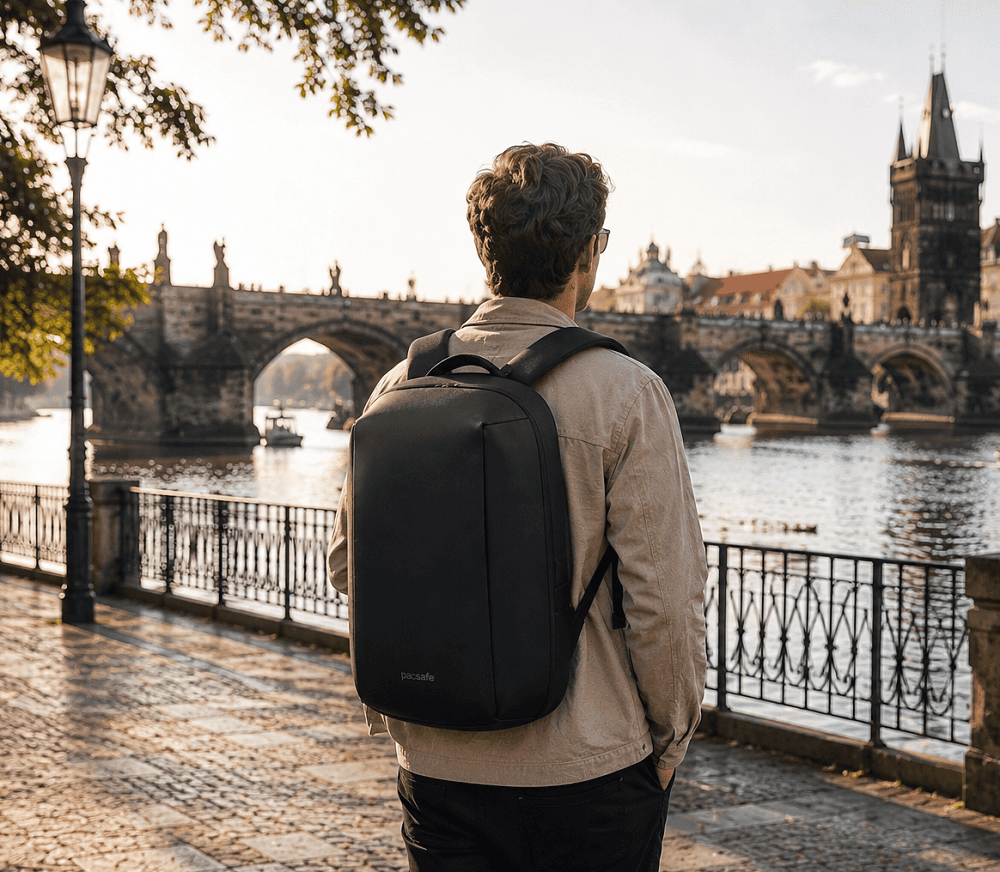
After testing multiple travel backpacks over the years, one pattern became obvious: standard backpacks are designed for convenience, not security.
The best anti-theft backpacks typically include:
- Hidden rear-facing zippers
- Cut-resistant fabric panels
- Lockable zipper systems
- RFID-protected compartments
- Reinforced shoulder straps
- Concealed laptop compartments
One feature I particularly value during international travel is a rear-access laptop compartment. Since the zipper sits against your back, it becomes nearly impossible for someone behind you to access the contents without your knowledge.
If you’re carrying expensive electronics, upgrading to purpose-built anti theft travel gear is often the single most effective security improvement you can make.
2. Use the Physical Lock-Down Method in Public Places
Many travelers imagine theft occurring in dark alleyways. In reality, some of the most common incidents happen in highly visible locations.
Coffee shops, airport lounges, hotel lobbies, and co-working spaces create ideal conditions for distraction-based theft.
Whenever I work in public, I follow a simple rule:
If I can’t physically touch my bag, it’s not secure.
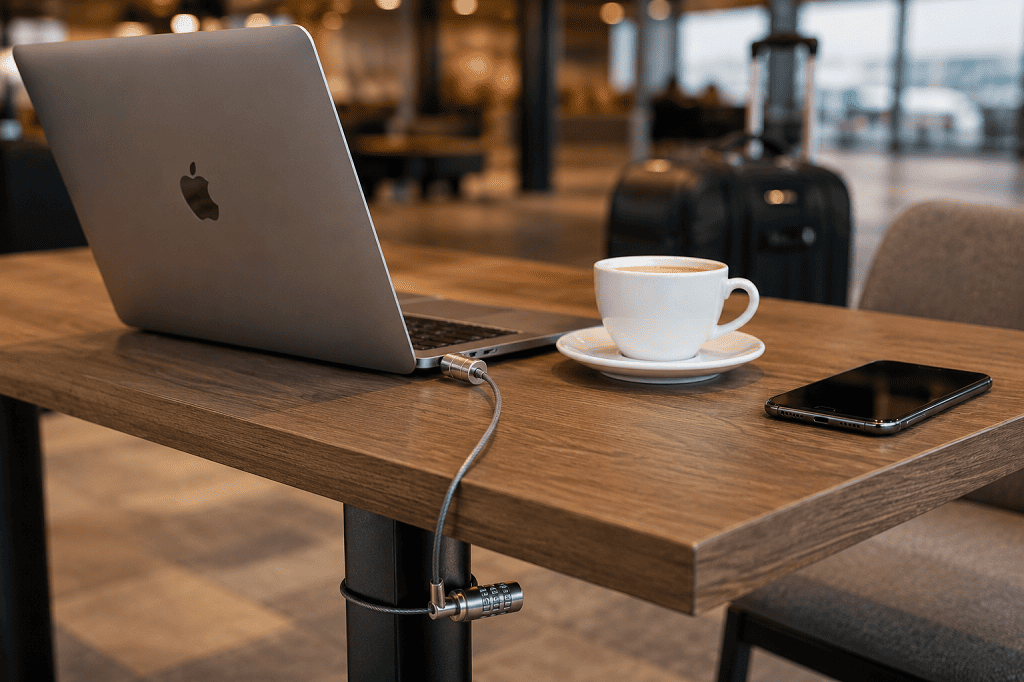
A lightweight steel cable lock can secure a backpack or laptop bag to a fixed object in seconds. While not impossible to defeat, it creates enough resistance that most opportunistic thieves move on to easier targets.
This small habit has become one of the most effective travel security tips I recommend to fellow travelers.
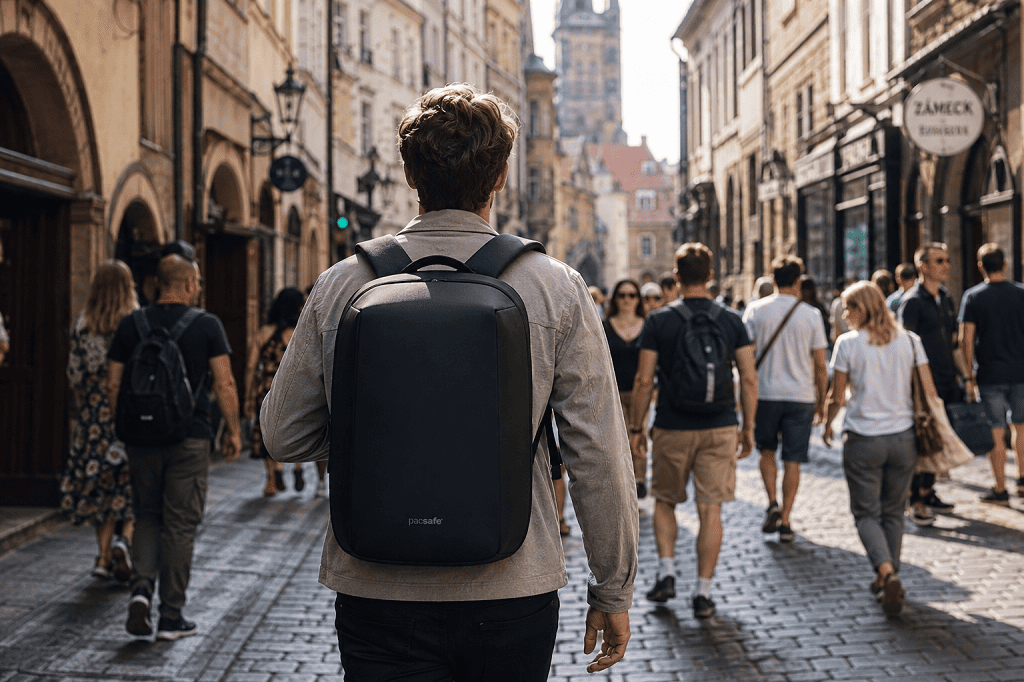
3. Practice Low-Profile Travel
Experienced travelers understand that visibility creates risk.
Expensive camera logos, premium laptop stickers, and luxury accessories signal value to potential thieves. Whenever possible, I avoid displaying technology unnecessarily in crowded environments.
Some simple adjustments include:
- Replacing branded camera straps with plain alternatives
- Using neutral-colored backpacks
- Storing devices before arriving at stations or terminals
- Avoiding prolonged device use near exits and transit doors
The goal is not paranoia. The goal is reducing attention.
In personal experience, blending in is often more effective than any lock or tracker.
4. Hide Bluetooth Trackers Inside Your Gear
No security system is perfect.
Even careful travelers occasionally leave a bag in a taxi or under an airplane seat. That’s why every piece of high-value gear I travel with contains some form of tracking device.
Bluetooth trackers provide two major advantages:
- Immediate location awareness
- Faster recovery of misplaced equipment
The most common mistake travelers make is attaching trackers externally.
Instead, place them inside hidden compartments, beneath removable liners, or within camera insert pockets where they are less likely to be discovered and removed.
For maximum effectiveness, enable separation alerts so your phone notifies you immediately if a bag moves out of range.
5. Build a Digital Security Layer
Physical theft is only part of the problem.
A stolen device containing personal documents, financial information, saved passwords, and cloud access credentials can create far greater damage than the hardware loss itself.
Before every international trip, I verify four settings:
Full-Disk Encryption
Enable FileVault on Mac devices or BitLocker on Windows systems.
Multi-Factor Authentication
Require a second verification step for email, banking, and cloud storage accounts.
Remote Device Tracking
Activate Find My iPhone, Find My Mac, or Find My Device.
Cloud Backup Verification
Confirm that photos, documents, and work files are synchronized before departure.
When configured correctly, a stolen laptop becomes little more than an expensive paperweight.
Final Verdict
Learning how to protect your tech while traveling isn’t about carrying less technology—it’s about carrying it more intelligently.
The combination of anti-theft luggage, physical security habits, concealed tracking devices, and strong digital protection creates multiple layers of defense. If one layer fails, another remains in place.
After years of traveling with thousands of dollars worth of electronics, I’ve found that the most effective security strategy is surprisingly simple: stay aware, stay prepared, and make your gear significantly harder to steal than everyone else’s.
Do that consistently, and you’ll spend less time worrying about your devices—and more time enjoying your journey.
Looking for Recommended Travel Gear?
Explore our expert reviews and buying guides for travel gear and travel technology.